
Solution area 01 · Resilient energy supply
A resilient energy supply starts with the right requirements.
When the public grid fails, your site needs a clearly defined backup supply. Think Voltaic develops backup power concepts for commercial applications. We establish which loads need to be supplied, how much power they require and how long an interruption they can tolerate.
- 01
Your loads determine the design
Communications, lighting, building services, refrigeration and operational processes have different requirements. Together, we identify priority circuits and the loads that can be switched off during an outage. This forms the basis for storage, changeover arrangements and the backup supply.
- 02
Assess power and duration separately
The required power determines which loads can operate simultaneously. Available energy and actual consumption determine the possible backup duration. The design takes account of state of charge, the reserve strategy and available generation.
- 03
Design the whole system for an outage
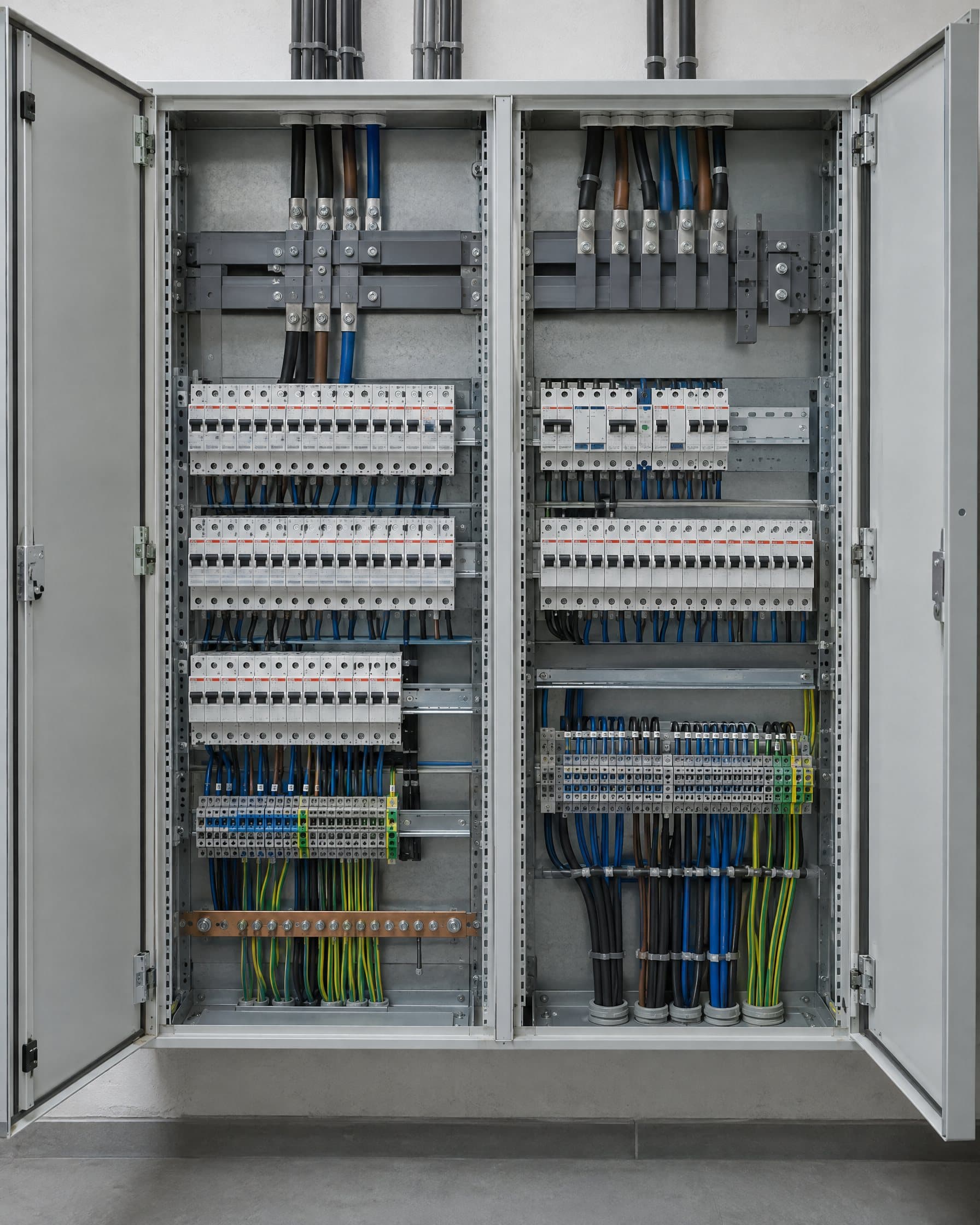
Solar PV and battery storage can support backup power only if the complete system architecture is suitable. We assess isolation from the grid, changeover arrangements, distribution and controls together. If a generator is to be added later, its interfaces and operating conditions are considered in the concept.
- 04
Develop self-sufficiency around your operations
Generating and storing your own electricity can reduce grid imports. However, a high share of self-supply does not mean that a site can operate without the grid at all times. We distinguish optimisation during normal grid-connected operation from specifically designed islanded operation.
- 05
Define and verify the backup supply
The concept records which loads will be supplied, the applicable operating conditions and how the function is to be tested. Whether the entire building can be supplied, and the permitted changeover interruption, are assessed for each project. Loads that cannot tolerate an interruption require a separately designed solution.
Resilience at the centre
Defined loads remain supplied.
The system isolates from the grid and switches to the backup supply. The permitted changeover interruption forms part of the design requirements. Storage and generation supply the agreed circuits. Power, backup duration and reserve follow from your site's data.
Questions about a resilient energy supply
Will a solar PV system continue to supply power during an outage?
A conventional grid-connected system shuts down when the grid fails. Continued supply requires a system designed for this purpose. Depending on the concept, this includes suitable inverters, storage, isolation from the grid and changeover arrangements.
Is every battery storage system suitable for backup power?
No. The storage system, inverters, distribution equipment and controls must all be suitable for the intended operation. The selected loads and available power are also critical.
Can the entire building be supplied?
This depends on the electrical installation, power demand and planned backup duration. It often makes sense to identify the essential loads first. We assess the required supply coverage before selecting equipment.
Does backup power automatically mean uninterrupted supply?
No. Changeover can cause an interruption. Loads that cannot tolerate any interruption require assessment of an appropriate solution, such as a suitably integrated uninterruptible power supply (UPS). The permitted interruption forms part of the design requirements.
How long will the battery last?
This depends on usable energy, state of charge and the loads being supplied. Recharging from suitable generation and the operating strategy also affect duration. A reliable answer requires data from your site.
Can an existing installation be upgraded?
We assess the existing components, metering and distribution arrangements, and the required function. This establishes which equipment can be retained and what modifications are needed.
What level of energy self-sufficiency makes economic sense?
We assess generation and consumption over time. The right solution depends on your objectives and the resources needed for additional generation, storage and reserve capacity. Maximising self-supply does not automatically produce the most economical design.
What does your energy supply need to deliver?
Talk to us about your site, consumption and project objectives. Together, we establish the information needed for an initial assessment and the steps that will move your project forward.